Genetic Monsters
Q. What are some of the “monsters” out there?
 Aswang is an umbrella term for various shape-shifting evil creatures in Filipino folklore, such as vampires, ghouls, witches, viscera suckers, and transforming human-beast hybrids (usually dogs, cats, pigs). The aswang is the subject of a wide variety of myths, stories, arts, and films, as it is well known throughout the Philippines. Spanish colonists noted that the aswang was the most feared among the mythical creatures of the Philippines, even in the 16th century. Although with no specific motive other than harming others, their behavior can be interpreted as an inversion of the traditional Filipino values. The aswang is especially popular in southern parts of Luzon, and some parts of Mindanao and Visayas, especially the Visayan province of Capiz.
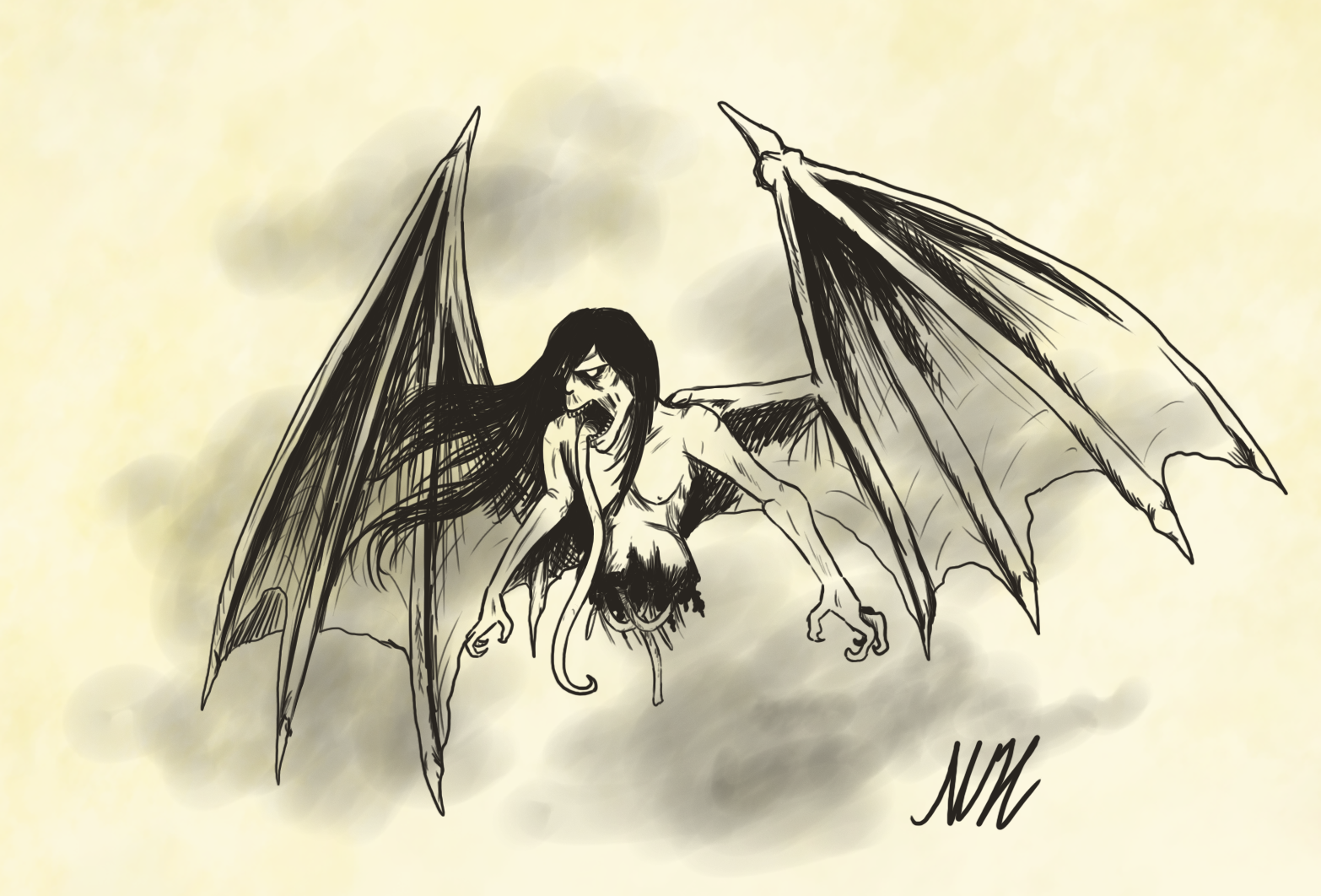 The manananggal is described as scary, often hideous, usually depicted as female, and always capable of severing its upper torso and sprouting huge bat-like wings to fly into the night in search of its victims. The word manananggal comes from the Tagalog word tanggal, which means “to remove” or “to separate”, which literally translates as “remover” or “separator”. In this case, “one who separates itself”. The name also originates from an expression used for a severed torso.
The manananggal is said to favor preying on sleeping, pregnant women, using an elongated proboscis-like tongue to suck the hearts of fetuses, or the blood of someone who is sleeping. It also haunts newlyweds or couples in love and sometimes a new born child. Due to being left at the altar, grooms-to-be are one of its main targets. The severed lower torso is left standing, and is the more vulnerable of the two halves. Sprinkling salt, smearing crushed garlic or ash on top of the standing torso is fatal to the creature. The upper torso then would not be able to rejoin itself and would perish by sunrise.
Cloning
Q. What is cloning?Clones are organisms that are exact genetic copies. Every single bit of their DNA is identical.
Clones can happen naturally—identical twins are just one of many examples. Or they can be made in the lab. Below, find out how natural identical twins are similar to and different from clones made through modern cloning technologies.
What should we clone? I think we should clone an animal that is going to be extinct, like a Rhinoceros in this way we can help them to repopulate and prevent them from extinction, the Rhinoceros left in the earth are 27,000.
The process of cloning. The process of cloning involves taking genetic material from a donor organism and creating an identical copy of it. This can be done through various methods such as somatic cell nuclear transfer or artificial embryo twinning. The cloned organism will have the same genetic makeup as the donor organism.
These are the Three types of cloning.
1. Reproductive cloning
Reproductive cloning is the process of creating an identical copy of an organism. It involves taking the genetic material from a donor organism and inserting it into an egg cell, which is then implanted into a surrogate mother. The resulting offspring will be genetically identical to the donor organism.
2. Therapeutic cloning
Therapeutic cloning, also known as somatic cell nuclear transfer, is a process that involves creating embryonic stem cells for medical purposes. It begins by taking an egg cell and removing its nucleus. Then, a somatic cell (such as a skin cell) from the patient is inserted into the enucleated egg, resulting in a cloned embryo. This embryo is then used to extract embryonic stem cells, which can be used for various therapeutic purposes, such as regenerative medicine and disease treatment.
3. Gene cloning
Gene cloning, also known as DNA cloning, is a technique used to create copies of a specific gene or DNA sequence. It involves isolating and amplifying the desired gene or DNA fragment, and then inserting it into a vector, such as a plasmid. The vector is then introduced into a host organism, such as bacteria, where it replicates and produces multiple copies of the desired gene. Gene cloning is commonly used in research, medicine, and biotechnology to study gene function, produce therapeutic proteins, and develop genetically modified organisms.
Somatic cells: cells in the body other than sperm and egg cells.
oocyte: Oocyte is an immature egg.
embroy: Embryo, the early development stage of an animal while it is in the egg or within the uterus of the mother.
DNA Fragment: The separation or breaking of DNA strands into pieces.
What should we NOT clone? We should not clone dangerous animals or plants that can harm us.
Should I clone an army? Yes in this way you can defend your country like if someone will invade your country the clones would be useful.
Should I clone my liver if I get sick? In my opinion maybe you should just in case you damage your liver.
Should I clone my kids in case they get sick? Yes because if they die you can just replace them, but it’s not that good anymore because you know that they are just clones not your real child.
Should I clone a strawberry plant? Yes because the strawberry plant is delicious, cloning strawberry can also be beneficial by selling it.
